Friday, February 19, 2010

Feature: Wakodahatchee Wetlands

A three-quarter mile long boardwalk with rain shelters meanders through different man-made habitat types at a facility known as Wakodahatchee Wetlands which is designed to naturally filter highly treated wastewater in southern Delray Beach, Florida.

The scene above was photographed at Wakodahatchee Wetlands in February 2010.

A very large alligator was observed in my February 2010 visit which is a testament to the successful feeding it has on the birds and mammals that have been attracted to Wakodahatchee.

The gator was interesting to watch in its apparent stealth to take down a Green Heron while the bird was brazen on a patch of land it seemed very comfortable on.

The alligator above was photographed at Wakodahatchee Wetlands in February 2010.

A juvenile alligator was observed during my February 2009 visit.

The five different habitats created on former agricultural land adjacent to the Palm Beach County Water Utilities Department Southern Region Water Reclamation Facility has resulted in excess of 150 bird species seen thus far by wildlife enthusiasts.

The Cattle Egret above was photographed at Wakodahatchee Wetlands in February 2009.

The majority of the birds are migratory species that should not be expected to be seen year round or even at certain times.

Such an example is the Black-bellied Whistling Duck which I had the great fortune to see in my 2010 winter visit to Wakodahatchee which was not seen in 2009.

The Black-bellied Whistling Duck above was photographed at Wakodahatchee Wetlands in February 2010.

The 2010 sighting more than made up for it as the dozen or so ducks in the group that inexplicably took flight and strafed me for a memorable experience.

Between the two visits, there was a give and take with species seen.

The Double-crested Cormorant and juveniles above were photographed at Wakodahatchee Wetlands in February 2010.

The very attractive Hooded Merganser was pleasantly seen in the same spot I had observed the species on both visits.

The male disappointingly did not show off his crest on my most recent visit.

The Hooded Merganser above was photographed at Wakodahatchee Wetlands in February 2009.

The Wood Stork, a bird species of special concern, was observed at Wakodahatchee in 2010 with about a dozen solitary individuals seen along Alligator Alley on the way back home to Florida's west coast.

Courtship behavior of the Great Blue Heron was not observed in 2010 as it had been in 2009.

The Wood Stork above was photographed at Wakodahatchee Wetlands in February 2010.

There were a number of nests observed that had Anhinga and Double-crested Cormorant juveniles begging for food from their parents on both visits.

This venue is very popular with visitors that are quite disruptive for wildlife photography when using a tripod as the boardwalk shudders with almost every step even from a great distance.

The wildlife enthusiast above was photographed at Wakodahatchee Wetlands in February 2010.

A similar must see venue within the Whistling-Duck and Wetlands Cluster of the Great Florida Birding Trail on a much larger scale is Green Cay Wetlands a short drive to the west.

Thursday, February 18, 2010

Sandhill Cranes in Tampa


As I was leaving the zoo this past weekend I noticed 3 sandhill cranes walking down the street away from the zoo. I turned back around into the parking lot of the zoo and parked my car at the end near the street. I got out and sat down in the parking lot near the grass and watched the cranes walk around. They didn't seem too disturbed by me. They just kept eating and walking around. Every once in a while they would look over at me. It's not very often you see sandhill cranes walking down a busy street in Tampa. My husband claims he sees them on the golf course all the time (although he doesn't play that much golf).

Tuesday, February 16, 2010

Pelicans being fed.


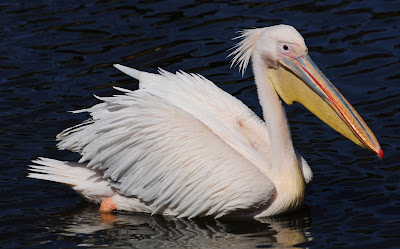
The Lowry Park Zoo has a handful of beautiful white pelicans that live in the big aviary in the African section of the zoo. They fly back and forth across the pond several times a day and stay together in a flock just like they do in the wild. This past weekend I happen to be there when they were being fed. They were so graceful the way they lined up and then caught the fish. There were a few cormorants braving the crowd looking for some crumbs.

Monday, February 15, 2010

2010 Great Backyard Bird Count: A Summary

There was snow cover on the ground during the entire period, which kept the feeders very busy.


Sparrows as a group were the most numerous birds, breaking many of my previous all time highs for the yard. I had 15 Eastern Towhees (tie), 38 American Tree Sparrows (record), 35 White-throated Sparrows(record), 8 Dark-eyed Juncos, 1 Fox Sparrow, and 8 Song Sparrows (record) *Highest # counted at one time, per the GBBC rules

The new 1 foot of snow on Presidents Day brought in more good birds, including 10 Brown-headed Cowbirds and 1 male Eastern Bluebird. The birds were fighting for the feeders and I even had a male towhee try to stay on the feeder as I was trying to fill it. He made an odd squealing sound as I approached him.

Wasn't able to get all of my expected woodpeckers, but was surprised by a brief sighting of a Red-headed Woodpecker that was down the street (flew over yard, but didn't stop at feeders). Broke my all time high for the yard for Red-bellies (8 at one time).

Somehow I managed to miss my resident Red-shoulder that I had seen the day before the count. I did get feeder raids by both expected accipters though. Also had flyovers of a Red tail, 1 Turkey Vulture and 3 Black Vultures. Was able to call in an Eastern Screech-owl at dusk. The Great-horned was heard calling from the big woods across the street at dusk while filling feeders.

Complete species list for weekend:

Black Vulture
Turkey Vulture
Sharp-shinned Hawk
Cooper's Hawk
Red-tailed Hawk
Mourning Dove
Eastern Screech-Owl
Great Horned Owl
Red-headed Woodpecker
Red-bellied Woodpecker
Downy Woodpecker
Hairy Woodpecker
Northern Flicker
Blue Jay
American Crow
Carolina Chickadee
Tufted Titmouse
White-breasted Nuthatch
Carolina Wren
Eastern Bluebird
American Robin
European Starling
Eastern Towhee
American Tree Sparrow
Fox Sparrow
Song Sparrow
White-throated Sparrow
Dark-eyed Junco
Northern Cardinal
Common Grackle
Brown-headed Cowbird
House Finch
American Goldfinch
House Sparrow

I had 34 species seen or heard in or from my yard for all 4 days combined.


Sunday, February 14, 2010

More wild birds at the zoo.

Snowy egret missing a foot.

Snowy egret with missing foot flying over the cheetah pond.


Great egret guarding the 2 hippos.


Night heron hanging around the alligator pond.


Great egrets beginning to nest high up in the trees above the alligator pond.
Saturday morning was cold for Tampa (41 degrees). I was going to stay curled up on the couch but then the sun came out right before noon so I headed out to the zoo. Lots of wild birds activity at the zoo. I saw the one footed snowy egret again hanging around the cheetah pond. I saw him several months ago at the meerkat exhibit. He must call the zoo home. As I made my way over to the alligator pond I noticed all of the trees where starting to fill up with great egret nests. There must have been 12 nests already going. There were also a lot of night herons hanging around. They will start nesting a little later. Last spring the zoo had a great little bird rookery going on around the alligator and otter pond. I'll have to go back in another month to see if there are baby birds being born.

Friday, February 12, 2010

Ding Darling NWR and Artie Morris in 2010

In the summer of 2009, I read in premier wildlife photographer Artie Morris' Bulletins and Notes Archive that he would not be visiting Ding Darling National Wildlife Refuge (DDNWR) for the first time in 11 years during his President's Week Instructional Photo-Tour (IPT) of southwest Florida.

The master wildlife photographer, Artie Morris, above was photographed at J.N. Ding Darling National Wildlife Refuge in February 2010.

The reason for this Artie described as a decline in the wildlife photo opportunities observed over the past decade at the refuge.

In the most recent musings in his blog, Artie mentions getting himself and his gear crapped on by some birds observed. He is really serious in his work to do that for sure.

The Instructional Photo-Tour (IPT) crew above was photographed at J.N. Ding Darling National Wildlife Refuge in February 2010.

I have made several trips to DDNWR in the last couple of years and had always been impressed by the diversity of wildlife seen at different times of the day and tidal situations.

Mr. Morris told me that his 11 February 2010 visit to the Ding Darling Refuge was unplanned while the weather here in Florida was too cold to take his clientele into the water at another planned venue at the time of his IPT.

The Great Egret above was photographed at J.N. Ding Darling National Wildlife Refuge in February 2010.

The unusually cold weather here in Florida this winter has been persistent to say the least. My last few beach trips have had me head to the car after my wildlife observations shivering uncontrollably.

There was relative seclusion from the northerly winds on the day of Artie's visit as the refuge is more of a see it from the road (Wildlife Drive) experience.

The Snowy Egret juvenile above was photographed at J.N. Ding Darling National Wildlife Refuge in February 2010.

Upon my arrival to the refuge, the IPT had already made a complete trip through the drive and had established itself at a great photographic location just beyond the entrance gate on its second trip through.

Co-leader of the IPT, Fabiola Forns, had told me that there was little opportunity upon the first trek through the sanctuary.

The White Ibis above was photographed at J.N. Ding Darling National Wildlife Refuge in February 2010.

When I had the opportunity to take my first photographs of Mr. Morris and others with him, I was surprised by the stance of the photographers. Comfortably on two feet they were, but certainly having taken a risk with their photo gear to get closer to the water's edge.

I would have been in the mud to document the Snowy Egret periodically dancing over the water in its search of food with numerous photo opportunities at hand.

The Tricolored Heron above was photographed at J.N. Ding Darling National Wildlife Refuge in February 2010.

This was an extraordinary experience I have observed at this place before. The situation should only be expected again in early morning light with a very low tide.

At one point, I recall Artie hollering the correct exposure to be using under the circumstances. I was way off. I was significantly overexposing my images of the birds.

The Wood Stork above was photographed at J.N. Ding Darling National Wildlife Refuge in February 2010.

It was my great pleasure to meet the down to earth co-leaders as well of the 2010 SWF IPT, Fabs and Arthur Forns. They were unpretentious and more than willing to share their expertise and have me meet everyone present affiliated with Bird Photographers Network.

There was a new word with seemingly great meaning added to the BPN lexicon while in the company of these fun people. Artie had called that a "wiggle" was needed. After clarification, the word summoned his group together for a trip down the road with a stop for lunch . . . I think.

Thursday, February 11, 2010

Windy day at Weedon Island

Little blue heron taking a break.

Night heron hiding from the wind.


A handful of oystercatchers hanging out on an oyster bar in the lagoon.


This past weekend I went to Weedon Island for a presentation on eagles in Pinellas county given by Barb Walker of the Project Eagle Watch. It was very interesting to learn about all of the eagles nests in the county and how they are doing. There's a huge group of volunteers that keep an eye out on these nests. I figured while I was there I'd bring my camera and get in a good walk around the reserve. I never seem to see much whenever I go there. It's just miles of boardwalk with 10 feet of mangroves on both sides. It was so windy out that I think all of the birds were hiding. I did manage to find a few sleeping in the mangroves around the inside ponds but not much else.