It has been a great pleasure of mine to have the opportunity to explore Harns Marsh Preserve for the purpose of wildlife observation as very few have.
 The Black-necked Stilt above was photographed at Harns Marsh Preserve in May 2011.
I was pleased to see
Bob Blanchard have the chutzpah to join me in exploration of the marsh which has not been documented other than from afar that I'm aware of.
Most other notable southwest Florida wildlife venues offer relative in your face wildlife observation opportunities.
 The dragonfly above was photographed at Harns Marsh Preserve in May 2011.
Harns Marsh is a man-made storm water reclamation facility that currently has little water due to a typically dry winter in southwest Florida and possibly because of
enhancement of the weirs that control its water flow.
I have seen fishermen at Harns Marsh often and an occasional boating enthusiast.
 The Black-bellied Whistling-Duck above was photographed at Harns Marsh Preserve in May 2011.
The marsh has recently had flyovers of helicopters that I speculate may have been conducting wildlife surveys of the marsh.
With rainwater from a few storms that have rolled though the area since the end of last year's rainy season, Harns Marsh is at the driest level I've seen it since my first visit nearly two years ago.
 The Osprey above was photographed at Harns Marsh Preserve in May 2011.
Dry weather conditions were actually an impetus for the construction of Harns Marsh with its inception in 1981.
It remains uncertain whether global cooling or warming was occurring at that time.
 The Red-shouldered Hawk above was photographed at Harns Marsh Preserve in May 2011.
The winter of 2009-10 was the coldest I've experienced in Florida and had been described as the same by people I've spoken with whom have lived in the state for decades.
I'm not sure the measurable extent of impact on Earth's climate from volcanic activity or from its sun with the
life sustaining orb having minimal sunspot activity in recent years.
 The Sunrise above was photographed at Harns Marsh Preserve in June 2011.
In any event, the wildlife at Harns Marsh is oblivious and makes due with conditions as they are in the moment.
Upwards of 7500 photographs were personally taken at the marsh in the last days of May and first days of June this week to document the wildlife that finds the marsh attractive for its survival.
 The Semipalmated Sandpiper above was photographed at Harns Marsh Preserve in May 2011.
In this short time, I was interested at how the water level appeared to drop at the marsh, albeit imperceptibly, with a couple of afternoon thunderstorms of little help.
Some areas of the preserve I would describe as wasteland with the mud cracking as it dries with some marsh grasses mere remnants of themselves.
 The Common Grackle above was photographed at Harns Marsh Preserve in May 2011.
Those individuals that constructed the marsh have done their job well as there are areas of the marsh that were found to offer water at a depth approaching three feet.
These areas were of course surprising to me as I encountered them.
 The Bald Eagle above was photographed at Harns Marsh Preserve in May 2011.
While I ventured through the southeast area of Harns Marsh Preserve, its heart if you will, the northwest marsh remains comparatively personally unexplored.
What had captivated my interest in devoting so much time in studying the marsh this past week was the discovery of a nest of Black-necked Stilt on 19 May 2011.
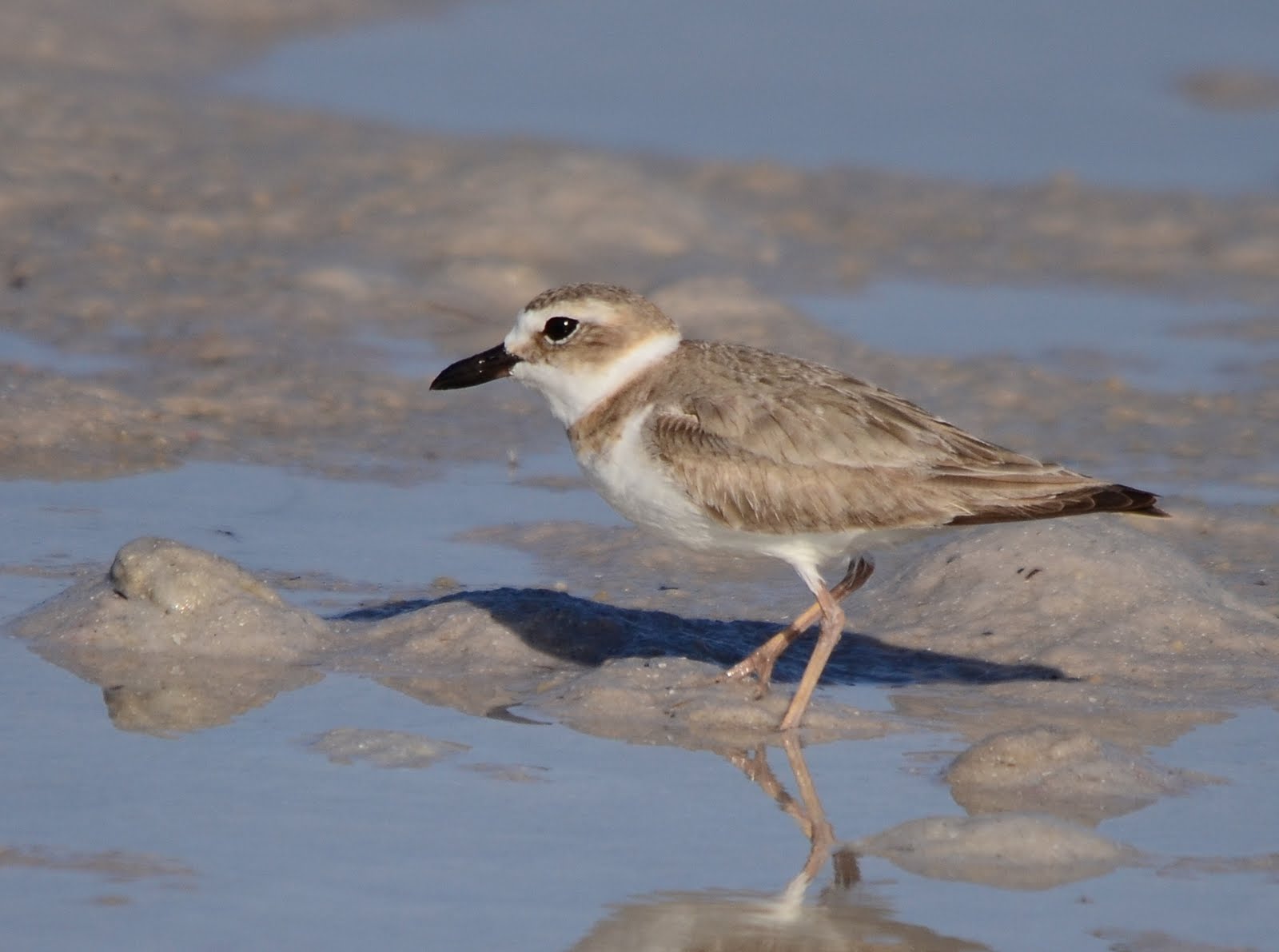
 The Killdeer above was photographed at Harns Marsh Preserve in May 2011.
I had arrived near sunrise or before each day this week to first check on the activity at the Black-necked Stilt nest.
As I found things progressing well each day, I would head further into the marsh to explore this stunning wildlife venue.
 The Black-necked Stilt above was photographed at Harns Marsh Preserve in May 2011.
On one of those days I would encounter again the rarely seen Black-bellied Whistling-Duck in southwest Florida while
Tom Obrock noted that he had observed in excess of a dozen individuals of this species at the beginning of May near the parking area.
This was a morning when I had seen Bob Blanchard educating a student on the difficult craft of successful wildlife photography.
 The Killdeer above was photographed at Harns Marsh Preserve in May 2011.
While Bob reported to me that he was unable to photograph the duck well that morning, he noted his discovery of Purple Gallinule that he was making an effort to document.
Another morning offered my re-acquaintance with Dave whom I had met just shy of a year ago at Estero Bay Preserve State Park (west trail).
 The Great Blue Heron above was photographed at Harns Marsh Preserve in May 2011.
I remember Dave speaking of his daughter at that time when he noted that she had an interest in wildlife study.
So it was a treat to finally meet Tabitha at Harns Marsh, a perfectly appropriate venue for the budding wildlife enthusiast whom I believe will be specializing in its observation once she graduates from LSU.
 Tabitha and Dave above were photographed at Harns Marsh Preserve in May 2011.
Tabitha at one point had made an approach to the marsh's edge having the opportunity to create a remarkable photo of a Limpkin that after a moment took flight right in front of her.
She was optimistic that she got the shot while telling me of a Laughing Gull image she had taken at the beach when some kids were feeding Laughing Gulls Goldfish crackers with one of the snacks facing into the open beak of the bird she was observing.
 The Sandhill Crane above was photographed at Harns Marsh Preserve in May 2011.
Limpkin is currently among the marsh's most abundant species with the other specialty of the marsh, Snail Kite, surprisingly absent of late only to be heard south of the parking area one morning this past week.
I speculate that the kite has eaten the majority of its food source in the marsh and is seeking its sustenance beyond.
 The Great Egret above was photographed at Harns Marsh Preserve in May 2011.
Harns Marsh is littered with countless thousands of Apple Snail shells which are a testament to the Snail Kite's success in finding its food source there.
With the marsh dryer, the Snail Kite's prolific return is assured as egg casings were observed on vegetation within the marsh.
 The Snowy Egret above was photographed at Harns Marsh Preserve in May 2011.
Each successive visit to the marsh this week offered great rewards.
On one morning I found myself compelled to rid a Cypress tree, in the marsh north of the parking area, of vines strangling it.
 The Limpkin with Common Grackle above was photographed at Harns Marsh Preserve in May 2011.
I spent about fifteen minutes doing this with the hope the tree would get better light and have the greatest chance of survival.
I didn't recognize the leaf of the vine as poisonous so with abandon snatched the invasive plant down as much as I was able.
 The White Ibis juvenile above was photographed at Harns Marsh Preserve in May 2011.
I note this action because of the surprise that would unfold.
Birds observed perched in this tree over time have included Snail Kite, Anhinga, Cattle Egret, Bald Eagle, Great Egret, and White Ibis.
 The Common Moorhen above was photographed at Harns Marsh Preserve in May 2011.
What was in store for me was the unexpected when observing snake skin that appears to have been shed by a formidable predator in the top of the tree.
The sight caused me pause and skip of a heartbeat with the snake skin still there as of this writing if anyone cares to take a look and identify the species it came from.
 The Little Blue Heron above was photographed at Harns Marsh Preserve in May 2011.
By far the species of bird seen this week I found most compelling to observe was Black-necked Stilt.
This species was observed over a broad expanse of the marsh where there are at minimum 13 of the stilts attempting to nest this season.
 The Black-necked Stilt eggs above were photographed at Harns Marsh Preserve in May 2011.
Extremely careful in exploring their ground to avoid disturbing a nest, I found the Black-necked Stilt to be very protective of their nesting areas.
Both Tom Obrock and Gayle Sheets have told me of their observation of Black-necked Stilts at the marsh defending a nest from the presence of the huge Sandhill Crane.
 The Roseate Spoonbill above was photographed at Harns Marsh Preserve in May 2011.
The stilt has extremely interesting tactics to ward off predators including a false broken wing and false brooding.
I was only able to identify one Black-necked Stilt nest containing four eggs which was very well protected by five stilts against all odds.
 The Glossy Ibis above was photographed at Harns Marsh Preserve in June 2011.
Other much larger birds than the stilt were often actively observed immediately around the stilt nest.
Very heavy rainfall would cause the marsh to begin to fill again resulting in the eggs in the nest mere inches from the waters surface to drown.
 The Swallow-tailed Kite above was photographed at Harns Marsh Preserve in June 2011.
As I ventured further into the marsh each day, Black-necked Stilts seemed omnipresent and would offer interesting vocalization in their calls.
I must remember that I have the ability to crudely capture their voices with my cell phone.
 The Wood Duck above was photographed at Harns Marsh Preserve in June 2011.
With the camera I was able to capture the defensive behavior of the Black-necked Stilt numerous times.
On June 1st it was revealed that the Black-necked Stilt nest had been plundered and was abandoned.
 The American White Pelican juvenile above was photographed at Harns Marsh Preserve in June 2011.
I can only speculate as to the culprit.
Was it a raccoon?
 The Tricolored Heron above was photographed at Harns Marsh Preserve in May 2011.
This predator I would think would leave egg shells behind while a snake would certainly consume the eggs whole.
The nest was studied for nearly two weeks before observing the loss of the eggs that were expected to hatch within a week.
 The Northern Cardinal above was photographed at Harns Marsh Preserve in June 2011.
Since Raccoon tracks were observed in various areas of the marsh, my speculation is that the mammal was the cause of the loss of the eggs I had been preoccupied in observing.
My second to last venture into the marsh led to observation of the Swallow-tailed Kite and a very rarely seen pair of Wood Duck flying south over the northwest marsh.
 The Wood Stork above was photographed at Harns Marsh Preserve in June 2011.
A day earlier, about a half hour before sunrise, I heard from the marsh's parking area Chuck-will's-widow at the intersection of 38th and Ruth Ave N.
On the final visit to the marsh this week I was able to very briefly view a Black-necked Stilt juvenile much deeper in the marsh.
 The Green Heron above was photographed at Harns Marsh Preserve in June 2011.
Although the success rate for the propagation of Black-necked Stilt is considered very high, it would be the only juvenile observed.
It appeared to be upwards of two weeks old.
 The Anhinga above was photographed at Harns Marsh Preserve in June 2011.
There were eight mature stilts observed in this area of the marsh.
Gayle Sheets notified me of the sighting of Bachman's Sparrow in the weeds at Harns Marsh Preserve this week.
 The Black-necked Stilt juvenile above was photographed at Harns Marsh Preserve in June 2011.
Gayle is a volunteer for Lee County Parks and Recreation and maintains bird checklists for the area.
Other species of bird personally observed at Harns Marsh this past week not represented through their image here were Red-winged Blackbird, Black Vulture, Turkey Vulture, Boat-tailed Grackle, Common Ground Dove, Cattle Egret, Pied-billed Grebe, Mottled Duck, Double-crested Cormorant, Red-bellied Woodpecker, Greater Yellowlegs, Black-crowned Night-Heron, Least Bittern, and Carolina Wren.
 The Black-necked Stilt above was photographed at Harns Marsh Preserve in June 2011.