Showing posts with label crested caracara. Show all posts

Friday, January 7, 2011

Near Perfect Tide With Kites

An avid fisherman told me a couple of years ago that winter tides are lower than those at other times of the year.

The sunrise above was photographed at Bunche Beach Preserve in January 2011.

I haven't been able to corroborate that any more than being in agreement through my own experience.

The tides that impact Bunche Beach should be considered relevant although I have had remarkable experiences under all conditions at this place.

The Great Blue Heron above was photographed at Bunche Beach Preserve in January 2011.

After a glance at the tides about an hour before sunrise with an opportunity for wildlife observation, I was pleased to see that the low tide at Matanzas Pass was slightly pre-dawn and ripe for a long overdue visit to Bunche Beach Preserve.

Hemant Kishan had told me via email that he had observed Long-billed Curlew at Bunche Beach late last week.

Eva and Martha above were photographed at Bunche Beach Preserve in January 2011.

Since I've only observed this species of bird twice before, it was a great hope to see the curlew again.

Hemant had noted that he has seen a Far Eastern Curlew in China, a Eurasian Curlew in India, and the Long-billed Curlew in California, while his sighting of the latter was his first observation of the LBC in the state of Florida.

The crab trap above was photographed at Bunche Beach Preserve in January 2011.

I wasn't a mile down the road when I realized I had forgotten to bring the flash with me again, so I turned around to retrieve it.

The tide was lower at the beach than I had seen before allowing me to walk further into into San Carlos Bay than I have been before.

The Cockle Clam above was photographed at Bunche Beach Preserve in January 2011.

My initial perception of the morning was disappointment as I initially only saw a Great Blue Heron and what appeared to be White Ibis on the horizon.

A visitor with an out of state plate on his vehicle made an effort to capture fresh marine life with a shovel.

The harvester above was photographed at Bunche Beach Preserve in January 2011.

The heron was entertaining to watch as it went into a sleeping posture after preening itself several times.

As I reached the point in which I would settle down and observe the action, it became evident the birds I initially thought were ibis were actually White Pelican.

The Ring-billed Gull above was photographed at Bunche Beach Preserve in January 2011.

Other White Pelicans were observed in high altitude flight while Brown Pelicans offered close flybys with strong evidence of breeding colors.

Though the seascape appeared desolate initially, it would prove to offer great diversity.

Genevive above was photographed at Bunche Beach Preserve in January 2011.

There were a number of fellow wildlife observers that were present throughout the morning.

It was interesting to see marine life in shells that were exposed as the water had retreated so far into the bay.

The Brown Pelican above was photographed at Bunche Beach Preserve in January 2011.

It was learned that the mollusks are called Cockle Clams while I also found that Sanibel Island is considered one of the top three shelling destinations in the world.

Black Skimmers were prolific at the preserve about an hour after my arrival.

The Spotted Sandpiper above was photographed at Bunche Beach Preserve in January 2011.

It would be very unusual not to see the species at Bunche Beach this time of year.

It was regrettable that I didn't see the Long-billed Curlew as hoped, but the visit to Bunche Beach Preserve was extremely rewarding nonetheless.

The Black-bellied Plover above was photographed at Bunche Beach Preserve in January 2011.

My second excursion of the week led me to Harns Marsh Preserve to meet up with Frank Constantin whom I coincidentally met while observing the curlew for the first time at Estero Lagoon two years earlier.

It was a remarkably clear morning with a light fog on the marsh which burned off within an hour after sunrise unlike preceding trips where the fog lasted for hours.

The Limpkin above was photographed at Harns Marsh Preserve in January 2011.

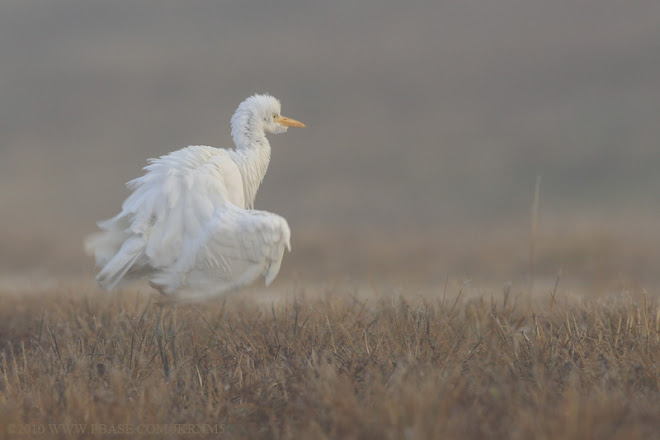
Frank had arrived at the preserve earlier than me and was in position to capture a stunning image of Cattle Egret in perfect light which he showed me on the viewfinder of his camera.

The few hours spent at the preserve with Frank passed too quickly.

The Mottled Duck above was photographed at Harns Marsh Preserve in January 2011.

The Snail Kite would tantalize with their presence for good photography.

A review of images taken has shown that at least one female kite at Harns Marsh is banded.

The Osprey above was photographed at Harns Marsh Preserve in January 2011.

Contention between a pair of Snail Kites was observed at the time of a kite's capture of an Apple Snail.

It was interesting to observe as well the attack of a juvenile Bald Eagle by an Osprey.

The Bald Eagle juvenile with Osprey above was photographed at Harns Marsh Preserve in January 2011.

Limpkin, the other species near assured to be seen at Harns Marsh were entertaining to observe as well.

Frank had told me that that he observed their feeding behavior for the first time.

The Snail Kite above was photographed at Harns Marsh Preserve in January 2011.

A visitor to the preserve approached us at one point seemingly apologetic for his tardiness noting that he had an encounter with Florida State police.

A group of wildlife enthusiasts arrived well after first light whom I learned were visiting from Quebec as Frank explained to me with the visitors speaking in the French language.

The wildlife observer above was photographed at Harns Marsh Preserve in January 2011.

Frank's conversation with one of the participants led to the understanding that they were each charged $2000 for food, lodging, and tours to wildlife venues for ten days.

There were a few in the group that had the sense to explore on their own making a good walk toward the area of the marsh where an unusual sighting of waterfowl might be observed.

The Snail Kite above was photographed at Harns Marsh Preserve in January 2011.

I thought it odd that they were communicated to with whistles seemingly in an attempt to call them back.

Frank's stunning imagery where he is not afraid to push his ISO high may be seen at his pbase site here.

The Quebecans above were photographed at Harns Marsh Preserve in January 2011.

Sandhill Cranes remained at a distance while the Crested Caracara failed to make another appearance.

Friday, December 31, 2010

Christmas Morning At Harns Marsh Preserve

It was a very foggy and chilly morning at Harns Marsh Preserve on Christmas Day 2010.

The sunrise above was photographed at Harns Marsh Preserve in December 2010.

That didn't deter me from an attempt to have a very rewarding time observing the wildlife which I did.

The first active flight observed was that of Roseate Spoonbill from the area where Limpkin are sometimes seen while always heard.

The Roseate Spoonbill above was photographed at Harns Marsh Preserve in December 2010.

The vultures were seen across the lake on the ground perhaps in their attempt to stay warmer while they're typically observed in the trees at first light.

A juvenile Great Blue Heron was very docile seemingly waiting for the sun to warm its bones.

The Great Blue Heron juvenile above was photographed at Harns Marsh Preserve in December 2010.

Limpkin were observed in flight more so than I had observed at Harns Marsh before.

This species has a tendency to stay very low to the ground even while in flight.

The Cattle Egret above was photographed at Harns Marsh Preserve in December 2010.

Snail Kite were active in their search of Apple Snails shortly before the fog burned off.

Osprey were again observed hunting successfully for their prey.

The Glossy Ibis above was photographed at Harns Marsh Preserve in December 2010.

What would become a remarkable observation for me was an inbound flight of a solitary Sandhill Crane that landed directly in front of me from the north.

As I observed this bird in amazement, two more cranes were walking toward me along the marsh's frontage road and emerged from the fog a short while later.

The Snadhill Crane above was photographed at Harns Marsh Preserve in December 2010.

Before the Sandhill Cranes arrived, a small flock of Cattle Egret appeared to become active from their slumber.

It was at this time that I was chiding myself for failing to bring the flash and Better Beamer.

The Snadhill Crane above was photographed at Harns Marsh Preserve in December 2010.

Always have them at the ready in case they're needed if you have them.

It was a special occasion to meet Hemant Kishan again at the preserve.

Hemant Kishan above was photographed at Harns Marsh Preserve in December 2010.

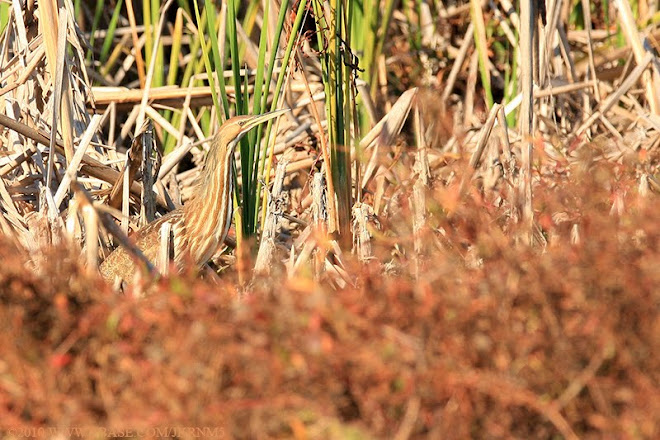
Hemant, a prolific American Birding Association contributor, was intently observing an American Bittern that he sighted at relatively close range.

He was kind enough to point my camera in the direction of the bird at one point as the bird was so well camouflaged in the reeds.

The American Bittern above was photographed at Harns Marsh Preserve in December 2010.

Hemant mentioned his interest in Celery Fields which he believes best visited in September.

It was interesting to observe a scuffle between a pair of Anhinga while the Tree Swallows seemed to be in lesser numbers than usual.

The Anhinga with Pied-billed Grebe above was photographed at Harns Marsh Preserve in December 2010.

The same pair of Great Egret observed a couple of weeks earlier offered their same repose in nearly the exact same spot I had last seen them.

Since my visit to Harns Marsh Preserve this week, I have read that the Crested Caracara is often seen in flight in the presence of vultures.

The Limpkin above was photographed at Harns Marsh Preserve in December 2010.

When I visit the preserve again, my first objective will be to scan the trees where the vultures are typically resting before they fly off to take advantage of the thermals in the absence of wind.

Friday, November 6, 2009

1700 Miles

It was an attempt of mine, with the opportunity, to observe migratory action of birds that may be making their way through Florida these past few days in the late 2009 migration period.

The Crested Caracara above was photographed at the Prairie Bird Loops within the Great Florida Birding Trail in November 2009.

While I was able to travel through two new regions (the East and Panhandle) along the Great Florida Birding Trail, I was only able to add a handful of new species of bird to my wildlife lexicon that I had not seen before.

My 1700 mile journey without doubt went by much too quickly.

The Common Moorhen juvenile above was photographed at Merritt Island National Wildlife Refuge (Black Point Wildlife Drive) in November 2009.

I managed to travel through 12 clusters of the trail and visit 31 new venues within them.

Some were more rewarding than others for the wildlife seen.

The Forster's Tern above was photographed at Merritt Island National Wildlife Refuge (Black Point Wildlife Drive) in November 2009.

Without question, the Merritt Island National Wildlife Refuge offered the most exciting viewing along Black Point Wildlife Drive.

I spent half a day there while attempting to photograph a greater plethora of the larger wading birds than I have seen anywhere else.

The Dunlin with Willet and Black-bellied Plover above was photographed at Merritt Island National Wildlife Refuge (Black Point Wildlife Drive) in November 2009.

I had hoped for the best weather and light conditions at this time, but was dealing with overcast conditions all morning. I was also shooting into the brightest light for the most part.

It was an opportunity to photograph under conditions I would normally avoid.

The Tricolored Heron above was photographed at Merritt Island National Wildlife Refuge (Black Point Wildlife Drive) in November 2009.

The greatest diversity of wildlife was seen at this venue, including an alligator seen that appeared no less than 12 feet.

In its vicinity, I spent a lot of time observing moorhens including what appeared a solitary juvenile which seem accustomed to living within the close proximity of such a predator as I've also observed in the Everglades area.

The Common Moorhen above was photographed at Merritt Island National Wildlife Refuge (Black Point Wildlife Drive) in November 2009.

In my opinion, the best wildlife observations can unquestionably be had at virtually any of the venues closer to home within the Southwest portion of Florida.

I can say for sure, based on my experience, that wildlife is prolific within the South Florida Birding Trail virtually at any time of the year to a greater degree than the observations I've made outside of it.

The Roseate Spoonbill above was photographed at Merritt Island National Wildlife Refuge (Black Point Wildlife Drive) in November 2009.

Certain venues seem to accommodate specific species of concern or interest. These creatures will be found around areas of water that provide them sustenance.

The drive home along I-10 was extraordinary in the view I had of the area of Torreya State Park. The light was perfect with the vista of the trees along the Apalachicola River.

The Belted Kingfisher above was photographed at Big Lagoon State Park in November 2009.

It was on my third trip through the area along I-10 that I had the opportunity to appreciate the magic this Florida state park has to offer.

I was very tempted to make an immediate u-turn, but decided to make a return trip there in the future.