Friday, September 17, 2010

Harns Marsh Preserve: Late Summer 2010

My attention to wildlife was at Harns Marsh Preserve this past week primarily with interest in again observing the Snail Kite which should be expected at this venue with modest effort.

The Snail Kite above was photographed at Harns Marsh Preserve in September 2010.

I planted myself at virtually the exact same spot on each of my three visits within six days to the preserve with the intent of the wildlife approaching me as opposed to making the few hour walk around the preserve's boundary.

The water level at Harns Marsh appeared very high this year due to what might be considered normal tropical rainfall.

The Snail Kite above was photographed at Harns Marsh Preserve in September 2010.

One of the highlights of my first visit of the week was a relatively close sighting of Belted Kingfisher.

I've found this species abundant in the area, even along the beaches, but it is a challenging bird to be in the right place at the right time to photograph.

The Belted Kingfisher above was photographed at Harns Marsh Preserve in September 2010.

There was fishing line observed in the body of a banded Snail Kite on day one that was observed on day two.

This particular kite was observed with three identification bands on its legs.

The Great Egret above was photographed at Harns Marsh Preserve in September 2010.

In addition, with calm conditions, there was an overflight of 17 most likely Mottled Duck with it interesting to see what might have been a battle for control of the lead as the group was never well formed as I saw them briefly.

The second visit to Harns Marsh had close observation of how the Snail Kite will meticulously dissect its prey before consuming it as observed during an earlier visit to the preserve.

The Snail Kite above was photographed at Harns Marsh Preserve in September 2010.

I also observed an overflight of Glossy Ibis which is a relatively rare sight compared to the White Ibis in the area.

It was my great fortune on this visit to meet San Diego Audobon member and skilled birder at the SDA website, Michelle Matson, visiting from San Diego with her companions from Orlando.

The Glossy Ibis above was photographed at Harns Marsh Preserve in September 2010.

Michelle co-lead the 4 March 2010 San Diego Audubon Society Tijuana River Valley Mexican border trip with Guy McCaskie who has been called the “godfather” of California birding.

Michelle specifically told me of her particular interest in one of her local specialties, California Gnatcatcher, while knowing confidently where to find them.

Ivette at left from Orlando and Michelle from San Diego above were photographed at Harns Marsh Preserve in September 2010.

She also made reference to the very vocal Red-shouldered Hawk observed at Harns Marsh Preserve with it noted her San Diego area species having a slightly darker breast.

Day three at the preserve offered views of close flybys of Snail Kite where I remained challenged by keeping them within the frame of the camera and using the best exposure bias for a shot true to what seen at the time.

The Red-shouldered Hawk above was photographed at Harns Marsh Preserve in September 2010.

Although the Snail Kite was not observed to pluck any snails from the water, it was observed in flight carrying snails on several occasions.

I also saw rare feeding behavior of the Red-shouldered Hawk which had snatched a dragonfly from the grass below a large pine tree.

The Snail Kite above was photographed at Harns Marsh Preserve in September 2010.

Osprey were more prevalent on this last day where they were seen riding the thermals with Black and Turkey Vultures.

Several large flocks of White Ibis with upwards of four dozen in one group that consisted primarily of juveniles were observed in flight as the headed south.

The Red-shouldered Hawk above was photographed at Harns Marsh Preserve in September 2010.

A much smaller group of White Ibis was seen flying to the north which I speculate had broken from the last group headed south.

Limpkin, Harns Marsh Preserve's other signature species, were heard on all three visits, but not seen from my vantage point.

The White Ibis above was photographed at Harns Marsh Preserve in September 2010.

I also had the chance to meet Josh whom arrived at the preserve at the same time as I did on day three.

Josh informed me of his memorable bird sightings at his workplace close to Corkscrew Swamp Sanctuary although his primary interest at Harns Marsh Preserve was to spend the morning fishing.

The Snail Kite above was photographed at Harns Marsh Preserve in September 2010.

In the time I spent observing the trees, water and sky in front of me, I couldn't help but think of day two.

It was at that time upon parking the car that I observed a large black fish jump from the water in its attempt to catch a dragonfly hovering over the water.

The White Ibis above was photographed at Harns Marsh Preserve in September 2010.

As I sat in the car in wonderment, I missed in my failure to set up as quickly as possible photography of one of the fastest class of flying birds for their size in my observations which are ducks.

Josh also commented that he at one time lived close to Babcock/ Webb WMA and confirmed my belief that the area should be avoided during scheduled hunts as the participants may shoot anything that moves on the morning after heavy partying.

The Snail Kite above was photographed at Harns Marsh Preserve in September 2010.

He told me of his successful fishing at Harns Marsh Preserve that morning before I left.

Harns Marsh Preserve appears to have boardwalk construction on hold although a mile or more of it is in order.

Josh fishing above was photographed at Harns Marsh Preserve in September 2010.

Thursday, September 16, 2010

Dreary day birding

The morning started out dreary with light rain/mist and low clouds. Being that it was my day off, I decided to look for birds ( a big surprise there ;-)

The first bird that I saw out the back door was this bright Northern Parula - this photo is from the back door in poor lighting. Definitely brightened up the day!

Northern Parula

I then decided to head for East Fork State Park. Got a later start then I wanted to, but the birding was good for warblers in the backyard early on.

Saw more Ospreys, 5 in total. One was dive-bombing an adult Bald Eagle high above the lake!

Osprey

Also saw 40 Blue-winged Teal way out over the lake. A Sharp-shinned Hawk also attempted a sneak attack on some European Starlings and Killdeer right in front of me. Not a bad way to spend my day off!

Skywatch Friday - Almost dark at Fort Desoto.

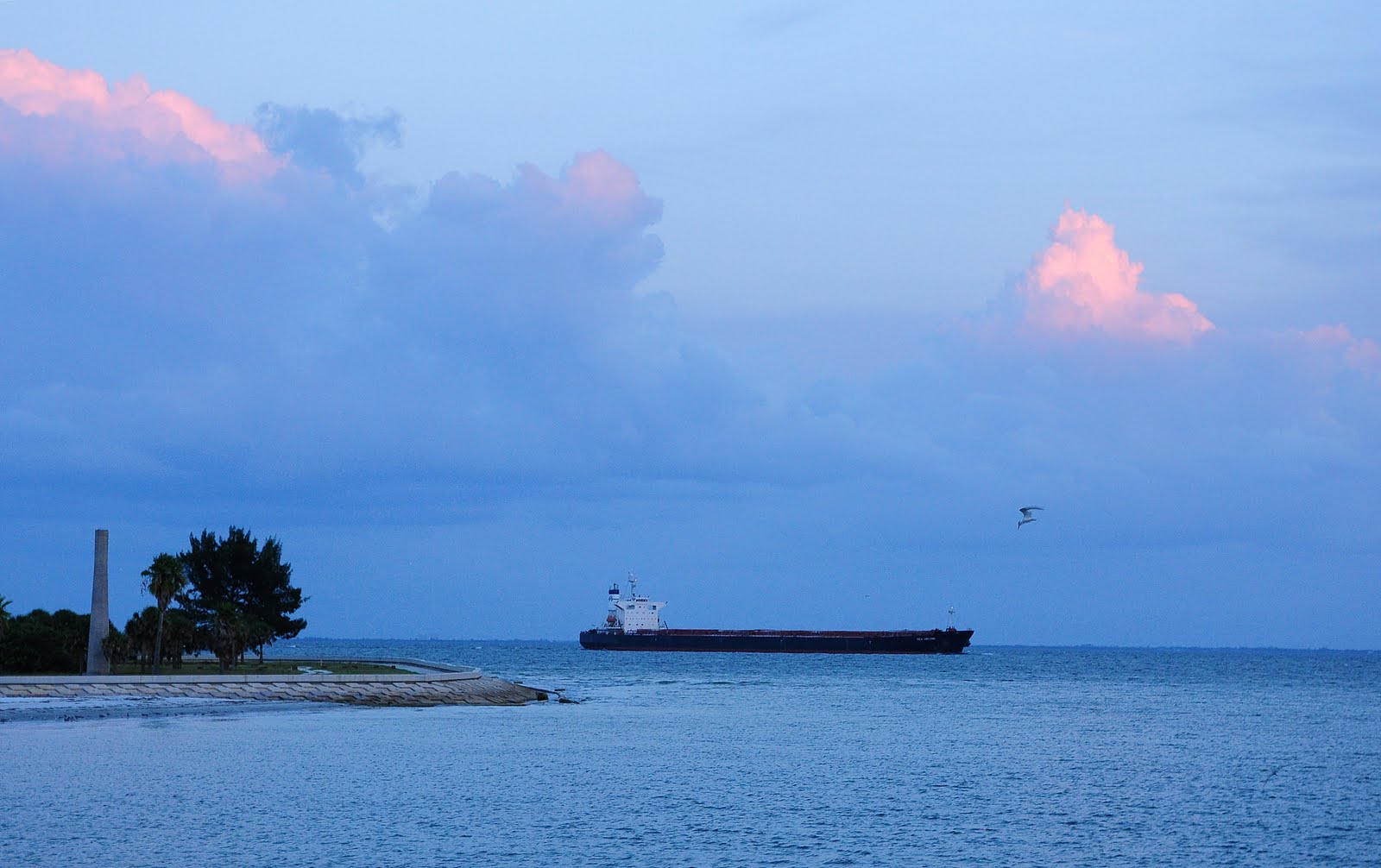
I was standing on the fishing pier at Fort Desoto waiting for the sun to go down when I turned around and saw this big barge going into Tampa bay. The ships come between Fort Desoto and Egmont Key. Sometimes they seem to come so close. I always wonder where they are going and what it would be like to be on one of those big ships. I'd probably be seasick.


For more skyscape photography from around the world, visit http://skyley.blogspot.com/.


Two more pictures of Fort Desoto at sunset. I think this was 2 Tuesdays ago. It looks like in the middle picture that there was almost no one on the beach. I'm going to try and get there again at least once before the time changes and then it will be dark when I get off work.

Tuesday, September 14, 2010

Dolphins at the fishing pier.


It's very rare that I don't see at least one dolphin at the fishing pier at Fort Desoto. On a recent trip after work I got to the pier right before dark so I could get some sunset pictures. There must have been at least 10-15 dolphins swimming around the pier. They were everywhere and some where coming right up to the pier. They try and steal the fish from the fishermen. The fishermen get really mad when they think they have a big one on the line and the dolphin comes up and steals it. I can't really tell if the dolphins are grabbing the end of the fish or the whole fish and hook. If so, I would hate to think how many hooks those dolphins have in their stomachs. It's got to make them sick. I have seen the men reel in a half eaten fish before but sometimes it comes back without the hook.
I saw the documentary "The Cove" on tv recently. The Planet Green channel has been playing it. I highly recommend that everyone watch this movie. Although, be prepared with a box of kleenex. The movie shows the slaughtering of dolphins for food in Japan and capturing of dolphins for aquariums. It really makes you think, not just about dolphins but about all animals. Anyway, it makes me appreciate the dolphins we have here in the Tampa Bay area. After 8 years I still get excited when I see one while I'm driving home across the bridge.

Sunday, September 12, 2010

Carillon boardwalk in north St. Petersburg.

Juvenile northern mockingbird. There were lots of mockingbirds there.

The usual alligator. He was swimming by the birds below.


Three juvenile night herons. The alligator was swimming close by. I think that's why they were standing at attention.


Lots of butterflies around.


Lots of turtles as well.
I found a new park close by work. It's actually not new, I just had not taken the time to stop there. I didn't think there would be much to see. It's a medium size lake with a boardwalk around most of it and surrounded on most sides by office buildings. There's a small section that has a trail and is covered by trees and mangroves. I left work later than usual one day recently and just decided to stop by and walk around. There was a handful of after work joggers running around. It had the usual water birds, alligators and turtles. I'll definitely stop there again since it's so close to work.

Saturday, September 11, 2010

All the birds are hungry!


Osprey got his prize fish.


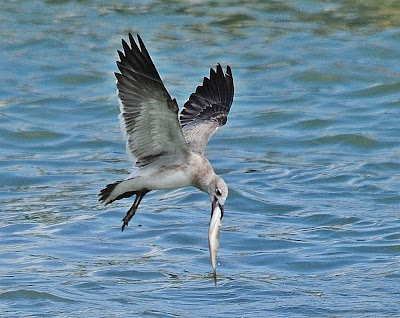
The juvenile laughing gull grabbed a fish but then dropped it. I think he needs more practice.


The above great blue heron stealing a fish from a man standing in the water fishing.
Note to people in the Tampa Bay area - don't leave food sitting out uncovered. I've seen gulls steal a sandwich off a blanket at the beach with a person sitting right behind it. I've seen them take a potato chip out of a kid's hand when the kid was about to eat it. They are very aggressive at stealing food and fish from fishermen. Hubby and I always eat our lunch sitting under the beach umbrella. It keeps the attack gulls away.
On our walk around Sand Key Park recently we saw lots of birds feeding. The osprey and gull were fishing for food under the big bridge where the small fishing piers are. For once I was paying attention and was able to get some decent shots of the osprey with a fish. The great blue heron was watching a man fishing for a while on the beach. That bird was smart. Once the man walked back in the water, the bird walked up to the bucket and grabbed a fish. Then the man got smart and came back on the beach and covered the bucket. Hey, everyone's got to eat, right?

Friday, September 10, 2010

Audubon Finish By A Nose

The 2nd Annual 2010 Audubon Magazine "Birds in Focus" photo contest came to a close this week with it to be featured in its Jan/Feb 2011 issue.

The Burrowing Owl image submitted to Audubon above was photographed near Cape Coral Library in 2010.

While the contest has allowed up to ten images to be submitted this year, I was only able to get six entered for consideration by the deadline.

Unlike last year, Audubon allowed a single image to be submitted this year without paying an entry fee.

The Burrowing Owl image submitted to Audubon above was photographed near Cape Coral Library in 2010.

This year's contest allowed me to have a better understanding of the importance of ensuring easy identification of image files by describing and dating them.

I had attempted to salvage a sluggish computer seemingly overburdened with images (hard drive at 97 percent capacity) by transferring the files to external hard drives while not considering an easy way to identify what the photo files represented.

The Burrowing Owl image submitted to Audubon above was photographed near Cape Coral Library in 2010.

I recall Bob Duckwall advising me that he was reading a book on the subject of how to easily identify stored images quite some time ago.

My primary purpose in entering the Audubon contest the last couple of years has been to offer enlightenment and amusement of the natural wildlife beauty that can readily be seen for the most part in southwest Florida.

The Burrowing Owl image submitted to Audubon above was photographed near Cape Coral Library in 2010.

With the discovery of Burrowing Owl in February 2010, which at the time was a goal merely to document the species as seen in Florida, the experience led to the lion's share of my time devoted to wildlife observation in the early part of the year.

The first encounter made 26 February 2010 led to observation of a mating event that evening mere minutes after sunset.

The Burrowing Owl image submitted to Audubon above was photographed near Cape Coral Library in 2010.

With it noted in David Sibley's Guide to Bird Life and Behavior that mating activity of Burrowing Owls is not well documented, 22 additional trips to Cape Coral, Florida, were made as late as 27 June 2010 this season to help improve the record.

Photography of a mating Burring Owl event requires the inordinate time that might be expected to be spent observing any bird species in the creation of an interesting wildlife image.

The Burrowing Owl image submitted to Audubon above was photographed near Cape Coral Library in 2010.

Such was the case with as many as several hours of observation time devoted to each of seven burrows studied with no guarantee that the owls occupying them would be observed to mate, an event that lasts from five to seven seconds, typically.

Unseasonal late winter/ early spring heavy rains this year were attributed to the delay in the observation of Burrowing Owl fledglings through the flooding of the burrows, but there were many juvenile owls observed on my last visit to Cape Coral as of this writing.