A kayak trip to "Bird Island," postponed for a week due to cold and windy conditions this early spring 2010, resulted in calm pre-dawn conditions and 39 degrees Fahrenheit at launch.
 The Great Egret above was photographed on "Bird Island" at San Carlos Bay: Bunche Beach Preserve in March 2010.
The water in San Carlos Bay felt extremely cold, much more so in fact than I've experienced at any time anywhere leisurely.
I've made a handful of trips to this mecca northwest of Matanzas Pass Bridge from the Bunche Beach Preserve parking area as well as from Bowditch Point just north of Fort Myers Beach, Florida.
 The Great Blue Heron above was photographed on "Bird Island" at San Carlos Bay: Bunche Beach Preserve in March 2010.
Unusual conditions temperature wise for otherwise warm and sunny southwest Florida which has been persistent since the beginning of the year.
There has been commentary of late that bird activity has not been as prevalent as in years past in this area.
 The Great Egret juvenile above was photographed on "Bird Island" at San Carlos Bay: Bunche Beach Preserve in March 2010.
Observations have not indicated that to be the case in my three years of Florida wildlife observation.
The nesting success observed at Bird Island observed today seems to indicate that all is well.
 The Great Egret with juvenile above was photographed on "Bird Island" at San Carlos Bay: Bunche Beach Preserve in March 2010.
I have noted in the past that a kayak or canoe launch to the island is preferred from the Bunche Beach Preserve parking area.
My experience today has me conclude that one should embark from Bowditch Point.
 The Great Egret with juvenile above was photographed on "Bird Island" at San Carlos Bay: Bunche Beach Preserve in March 2010.
From the latter, your distance traveled is greatly shortened, but keep in mind that you will have to potentially deal with much larger watercraft and their wake with extreme care.
The commute should last no more than a half hour and offers a wildlife experience quite exhilarating at times.
 The Great Egret juvenile above was photographed on "Bird Island" at San Carlos Bay: Bunche Beach Preserve in March 2010.
Once near the island approximately 300 feet in diameter, the calls of the juvenile birds become more evident.
The smell of a very active colony wasn't as pungent as in the past with the cooler conditions for sure.
 The Great Egret juvenile above was photographed on "Bird Island" at San Carlos Bay: Bunche Beach Preserve in March 2010.
The predominant nesting species include the Great Egret with a Great Blue Heron observed to compete for a nest as they each took turns to make placement of a particular twig within it before eggs are laid.
I knew immediately that I should have been prepared to document my observations of the wildlife without the 1.4X teleconverter I had attached to the camera that somewhat limited the appeal I was looking for.
 The White Ibis above was photographed on "Bird Island" at San Carlos Bay: Bunche Beach Preserve in March 2010.
There was an egg observed outside of a Great Egret nest that will never hatch.
It appeared the egg was either intentionally or inadvertently displaced by one of the offspring.
 The Double-crested Cormorant above was photographed on "Bird Island" at San Carlos Bay: Bunche Beach Preserve in March 2010.
The only species I hadn't observed but expected on my most recent trip to the island was the Tricolored Heron.
The regulars in very close proximity included Great Egret, Great Blue Heron, White Ibis, Snowy Egret, Double-crested Cormorant, Brown Pelican, Black-crowned Night-Heron, Black Vulture, Turkey Vulture, Reddish Egret (solitary) in flight, and Grackle.
 The Great Egret above was photographed on "Bird Island" at San Carlos Bay: Bunche Beach Preserve in March 2010.
Much of the time on the island was spent observing nests more than birds in flight.
Fallen trees from storms of past are still accommodating for an improved view of the activity on the island.
 The Turkey Vulture above was photographed on "Bird Island" at San Carlos Bay: Bunche Beach Preserve in March 2010.
One in particular was much more overgrown than I remember from a visit last year where climbing it for better photographic advantage was impossible as egrets had commandeered it for their own.
Glass bottles of various sizes and shapes were seen as well with fishing line observed in a nest and entangled on a fallen tree that could have only gotten there intentionally.
 The Black Vulture above was photographed on "Bird Island" at San Carlos Bay: Bunche Beach Preserve in March 2010.
I did not see the arrow piercing a nest and bird that was found last year.
An entangled Brown Pelican hung from fishing line in a mangrove at the water's edge near the southeast of the island.
 The Black-crowned Night-Heron above was photographed on "Bird Island" at San Carlos Bay: Bunche Beach Preserve in March 2010.
My departure from the island was from the same oyster shell laden side as I had arrived.
The trip back to the parking area was eventful as I encountered a very strong head wind from the west.
 The Great Blue Heron above was photographed on "Bird Island" at San Carlos Bay: Bunche Beach Preserve in March 2010.
I was only able to make very slow progress back to the Bunche Beach parking area.
After I passed the east channel, I chose to walk the last mile, but not before falling out of the kayak in my successful attempt to protect the camera.
 The Great Blue Heron juvenile above was photographed on "Bird Island" at San Carlos Bay: Bunche Beach Preserve in March 2010.
It was a very long, cold and uncomfortable walk thereafter.


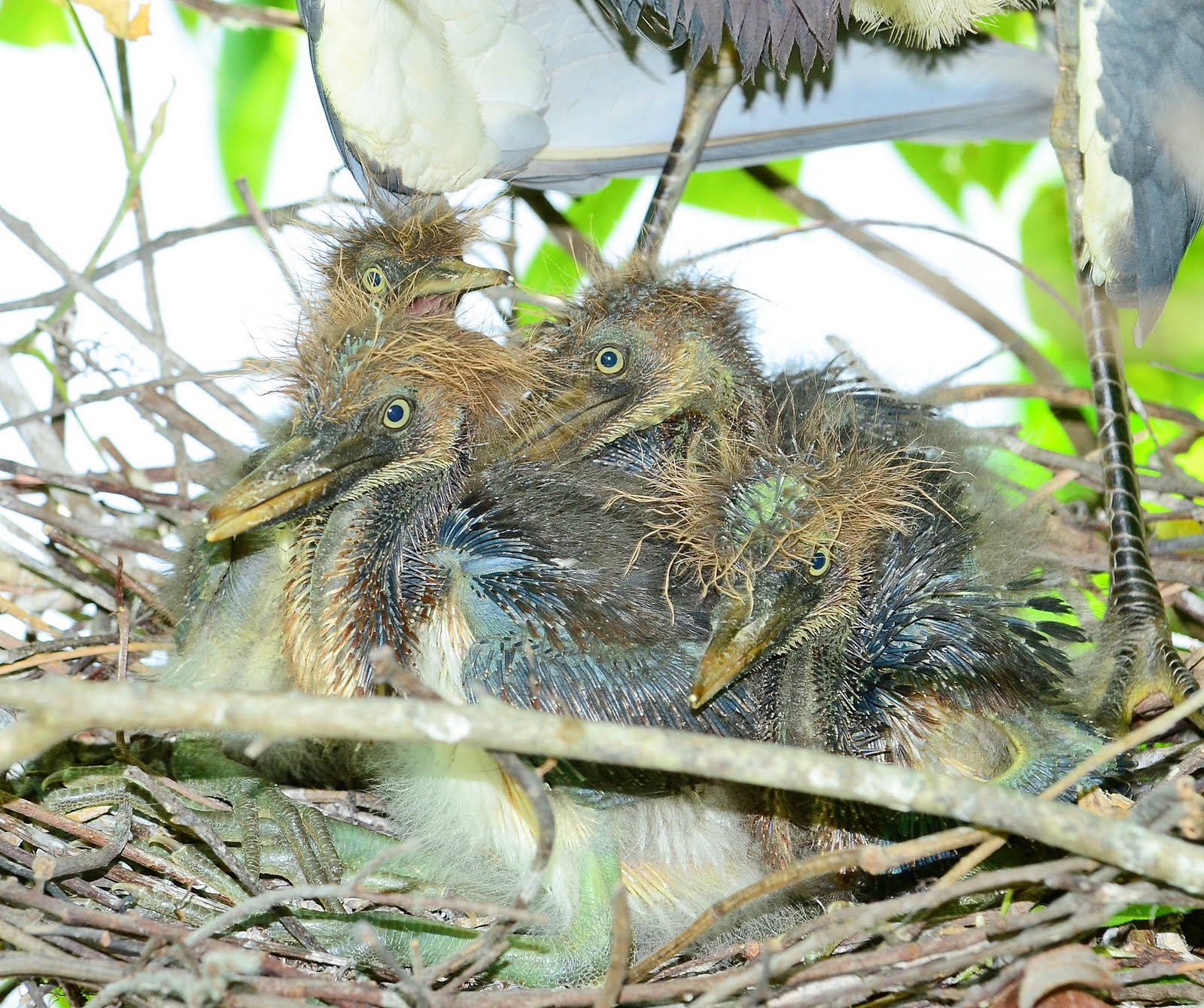





 Juvenile moorhen screaming for a snack. I love their big yellow feet.


